

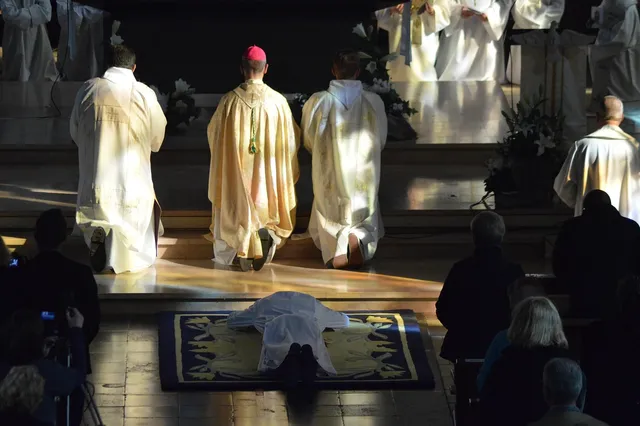
Christ at the Centre. Everyone at the Table.
The Apostolic Old Catholic Mission (AOCM) welcomes all who are discerning God’s call. We believe that vocations are at the heart of our life as a Church. Whether lived out in family, in community service, or in ordained ministry, each vocation is a unique gift of the Holy Spirit meant for building up the Body of Christ.
While we are proud of our roots in the wider Independent Sacramental Movement, the Mission is a distinct community with a specific ethos. We hold firmly that vocations belong to the whole people of God, not just a select few. We are a community of “servant leaders,” not title collectors, dedicated to the ancient faith and the radical welcome of Jesus Christ. This page is for all those who seek to become a priest or deacon, or who wish to incardinate.
A Radical Welcome with Responsible Discernment
The Mission does not block those whom God may be calling because of identity, background, gender, sexuality, marital status, or past exclusion by other churches. At the same time, formation and incardination require honesty, safeguarding, accountability, maturity, and due diligence. We do not simply accept everyone who makes an enquiry.
We affirm and welcome candidates with a heart to serve Jesus Christ. Our clergy, postulants, and lay leaders include people who are LGBTQI+, straight, bi, binary, non-binary, divorced, married, single, men, and women.
If you love the Lord, affirm the Creeds, and are willing to wash feet in service to others, we welcome you to undertake honest discernment with us. We do not ask you to leave your identity at the door; we ask you to bring your whole self to the Altar. This welcome is not a promise of acceptance for formation, ordination, or incardination. Suitability, safeguarding, maturity, conduct, accountability, and willingness to live within the Mission’s inclusive ethos and governance are considered throughout the process.
Please note: This video introduces our vocational vision. The Licentiate in Diaconal Ministry has since been updated as a structured, cohort-based programme completed within one year. The cohort progresses together through approximately four hundred and forty (440) nominal formation hours, with required daily and weekly study and formation commitments. It is not a self-paced or “do what you want, when you want” course; you must keep to the published timetable and participate consistently with your cohort.
1. Formation: How to Become a Priest or Deacon
(For those seeking ordination for the first time)
The word vocation comes from the Latin vocare, meaning “to call.” For us, this call is universal—every Christian is called to holiness. However, some are called to a specific sacramental role within the Church.
If you are exploring how to become a priest or a deacon, please understand that at the Mission, this is a process of deep discernment, not a transaction. We are not an “ordination mill.” We uphold the historic threefold ministry of Deacon, Priest, and Bishop, and we take the formation of our clergy seriously.
The Path to Ordination
For those seeking to become a priest or deacon, we offer a robust formation pathway through our Institute of Ministry.
Please note: the Institute website is currently in development and will continue to be expanded as programme information is finalised.
This training is designed to be accessible yet rigorous, ensuring that you are grounded in Scripture and theology and properly prepared for service within the Independent Sacramental and Western Rite tradition.
The Diaconate: A Complete Vocation of Service
The diaconate is not merely a stepping stone to the priesthood. It is a complete and enduring vocation in its own right for those called to serve as deacons. It is also the necessary first order for anyone who may later be called to become a priest: before presiding as a priest, you must first be formed in service and exercise ministry as a deacon.
- The Course: Candidates normally complete the concentrated cohort-based Licentiate in Diaconal Ministry (LDM) course. Current cohort dates and application windows are published by the Institute of Ministry. Candidates must apply for consideration, and places are limited.
The LDM is an intensive, cohort-based formation programme for candidates preparing for the diaconate within the independent sacramental and Western Rite tradition. It is designed for people who are genuinely called to servant ministry: the ministry of the Word, of worship, and of practical care for the communities they serve.
This is not simply a course you complete. It is a formation you undergo together with your cohort. You will study Scripture carefully, engage the Church’s doctrine and sacramental life seriously, develop real pastoral and ministry skills, and bring all of that into a portfolio of evidence that reflects who you are becoming — not merely what you have studied. - The Focus: This course focuses on the “Ministry of Service”—serving the poor, reading the Gospel, and assisting at the Altar.
- Timeframe and commitment: The LDM is a time-limited, one-year cohort programme comprising approximately four hundred and forty (440) nominal formation hours. Because the cohort progresses together, you must keep to the published schedule and commit the required study and formation hours each day and week. It is not a “do what you want, when you want” course. Current schedules and application windows are published by the Institute of Ministry.
Further Formation for the Priesthood
If, after formation and service as a deacon, you and the Mission discern a call to become a priest, you may be considered for further priestly formation. Priesthood is not an automatic progression or promotion from the diaconate; it is a distinct vocation and ministry for which further discernment, formation, and selection are required.
- The Course: Candidates may proceed to the Licentiate in Sacred Ministry (LSM), if selected. This course is expected to be cohort based. Candidates must apply for consideration, and only between two (2) and three (3) candidates will be selected from all applicants.
- IMPORTANT: This course is in development. Its availability and commencement arrangements will be announced by the Institute of Ministry.
- The Focus: This advanced formation covers the celebration of the Eucharist, the theology of reconciliation (Confession), and the pastoral care of souls.
- The Goal: To form a priest who is not a “magician” performing rites, but a shepherd caring for a flock.
- Timeframe: The length of further study and spiritual formation is determined after review and may vary according to prior formation, experience, and circumstances.
Key Requirements for Formation
To ensure the maturity and safety of our ministry, we have set the following non-negotiable standards for all applicants:
- Age: You must be 21 years of age or over to enter formation.
- Safeguarding: The protection of the vulnerable is a spiritual duty. All postulants must complete the A1 Safeguarding Course (or a recognised equivalent) and provide a clear police background check before ministry can begin.
- Financials: We try to keep formation as low-cost as possible. Applicants remain responsible for their own required documents, safeguarding training, police clearance, study materials, and any agreed administrative or formation costs.
- The Reality: Please note that our clergy are not salaried; we are a worker-priest movement. We serve for love of God and neighbour, supporting ourselves through secular employment.
Before you begin: Please allow ample time to complete the initial enquiry carefully, ideally in a quiet and undisturbed setting. No supporting documents are required at this stage; if your enquiry proceeds, we will tell you what evidence and later requirements apply.
Begin the initial enquiry2. Incardination: Joining the Mission
(For clergy already ordained in valid Apostolic Succession)
For those who are already ordained as deacons, priests, or bishops in other jurisdictions, incardination is the process of formally entering into ministry within the Apostolic Old Catholic Mission.
Incardination is more than just a transfer of paperwork; it is a covenant of mutual accountability. We honour your existing ordination, the ministry you have undertaken, and the grace God has already poured into your life. In a spirit of trust and good order, the Mission verifies orders, standing, formation, safeguarding, and ecclesial accountability before authorising ministry within the Mission. This does not presume dishonesty or diminish what has gone before; it allows you and the Mission to enter a shared pastoral life responsibly.
The “Bridge” to Incardination
We welcome validly ordained clergy from across the Christian world—Roman Catholic, Anglican, Orthodox, and the wider Church. However, to ensure we are truly walking together (“synodality”), we require a period of orientation.
- The Course: Where required following review, candidates for incardination must complete our Orientation & Equivalency (OEI) course.
- Why is this required? Even experienced clergy need to understand how the Mission is governed and why we hold our specific theological stances. The OEI acts as a “bridge,” aligning your previous formation with our ethos of radical inclusion and servant leadership.
- Vetting: In a spirit of trust and good order, we verify your orders to ensure valid apostolic succession (proper form, matter, and intent). If your enquiry proceeds, a current background check and completion of our mandatory safeguarding training will be required before ministry can be authorised.
- Timeframe: The required orientation, study, prayer, and any additional spiritual formation are determined after review and may vary according to prior experience and circumstances.
Incardination with a Community or Parish
Our approach to incardination reflects the wider ecumenical vision expressed in the World Council of Churches’ Lima Document on Baptism, Eucharist, and Ministry. We can consider an enquiry from an ordained minister who wishes to enter the Mission together with a community, parish, or more than one community for which they are pastorally responsible. In such a case, the clergy member completes the initial incardination enquiry and explains which community or communities are involved. We then discern the proposed reception of the clergy and the community or communities with care and prayer. The button below is therefore for an ordained minister enquiring about incardination, whether alone or together with the community or communities they currently serve.
Existing Bishops and Discernment of the Episcopate
A person already serving as a bishop may submit an incardination enquiry. We will consider an enquiry from a bishop entering alone, but, where possible, we prefer to discern the reception of a bishop together with the community or communities for which they are pastorally responsible. As with every incardination enquiry, orders, standing, safeguarding, ecclesial accountability, community relationships, and suitability are verified before recognition or ministry authorisation is granted.
The Mission does not currently provide, and is not presently planning, a formation programme for bishops. A priest should therefore not submit an application or enquiry asking to become a bishop. We understand the episcopate as a ministry to which a person is normally recommended by their community and then discerned by the Mission together with its existing clergy. It is not an office or title for which someone simply applies.
There can be exceptional circumstances, considered individually. For example, where the continuity or survival of a community genuinely requires episcopal provision, the Mission may discern whether it is appropriate to assist with episcopal elevation. Such assistance is exceptional, follows careful communal and ecclesial discernment, and is never automatic or guaranteed.
Begin an incardination enquiry3. A Life of Study: Scholarly Yet Humble
We encourage all our clergy—whether they are looking to become a priest or seeking incardination—to maintain an active life of the mind. We value a clergy that is “scholarly yet humble,” able to engage with the complex questions of the modern world while remaining grounded in the simplicity of the Gospel.
To understand the breadth of our theological outlook and the richness of the Independent Sacramental Movement, we recommend all candidates engage with our study materials before and during their formation.
4. Our Ethos: Servant Leaders, Not Title Collectors
Before you apply, it is vital to understand the culture of the Apostolic Old Catholic Mission. We have no room for “showmen” or those seeking elevation or titles for its own sake.
- We are not an ordination mill. We do not hand out titles.
- We are not a “diploma factory.” Our courses (LDM, LSM, OEI) require real work.
- We are a field hospital. Our vestments are work clothes. Our altars are workbenches. Our mission is to heal, not to rule.
- We are servants. We do not value grandiose titles and do not dish out heraldic titles.
If you are looking for a path to quick titles, unchecked authority, or fancy robes without service, this is not the home for you. But if you are looking to serve Christ in humble freedom, deep community, and theological curiosity, we welcome you to the Table.
Frequently Asked Questions:
-
Does the Apostolic Old Catholic Mission ordain women to the priesthood?
Yes. The Mission affirms the full participation of women in all levels of Holy Orders, including the diaconate, priesthood, and the episcopate. We believe the Holy Spirit calls individuals based on their gifts and devotion rather than their gender.
-
Can a married or partnered person become a priest in the Mission?
Yes. We welcome married, single, and partnered individuals to pursue a vocation. Following the ancient apostolic tradition, we believe that the lived experience of family life and secular employment provides a grounded and empathetic foundation for pastoral ministry.
-
Is it possible for an LGBTQ+ person to be ordained?
Yes. The Mission operates with a “Radical Welcome”. LGBTQ+ identity is not a barrier to beginning discernment. We affirm and welcome LGBTQ+ people who have a heart to serve Jesus Christ and the people of God, while applying the same requirements concerning suitability, safeguarding, maturity, conduct, accountability, and our inclusive ethos to every enquiry.
-
Do you accept clergy who were ordained in other denominations?
Yes. Through the process of incardination, we receive enquiries from deacons, priests, and bishops ordained in Roman Catholic, Anglican, Orthodox, and other jurisdictions. Existing orders and ministry are approached respectfully and verified as part of mutual discernment, followed by orientation and any bridging work required after review.
-
Do I have to pay for my seminary or formation training?
Yes. Some courses and formation pathways carry a fee so that the Mission can cover essential costs and provide a stable, well-supported learning experience. We keep fees as modest and transparent as possible, but candidates are responsible for their own required documents, study materials where not supplied, safeguarding training, police clearance or criminal record checks, and any agreed administrative, formation, or incardination-related costs. Formation also requires real commitment, so applicants should apply only if they are ready to study seriously, meet requirements, receive correction, and persevere when the process becomes demanding.
-
Will I receive a salary or stipend for my ministry?
No. The Mission is a worker-priest movement. Our clergy are not salaried and support themselves through secular employment. This allows us to serve freely and maintain a presence in the world as a “field hospital” for those in need.
-
Is there a minimum age requirement to start formation?
Yes. You must be 21 years of age or older to enter the formation process. This ensures that candidates have reached a level of maturity and life experience necessary for the responsibilities of ordained ministry.
-
Do I need a university degree to apply for the priesthood?
No. While we value a “scholarly yet humble” clergy, a prior university degree is not a strict prerequisite for entry. Our Institute of Ministry provides a robust academic pathway through the LDM and LSM courses to ensure you are properly equipped.
-
Can I remain in my current secular job while serving as a priest?
Yes. We actively encourage our clergy to maintain secular employment. This “tent-making” model follows the example of St Paul and ensures our priests remain deeply connected to the everyday struggles and joys of the people they serve.
-
Are background checks and safeguarding training mandatory?
Yes. The protection of the vulnerable is a sacred duty. All candidates must complete an approved safeguarding course and provide a clear police background check before they can be authorised for ministry.
-
Does the Mission have a presence in the United States, United Kingdom and South Africa?
Yes. The Mission is an international community with candidates for formation currently in the US and an ordinand in South Africa. We utilise modern communication to maintain close pastoral support for our global members.
-
Is the formation process quick?
No. We are not an “ordination mill.” The path to the diaconate typically takes one year of training, with further time required for those discerning the priesthood. We value deep discernment and rigorous preparation over speed.
-
Does the Mission accept or perform online ordinations?
No. We do not recognise or perform online ordinations. To become a priest is a sacramental act that requires the physical laying on of hands in Apostolic Succession. While your theological vocation training may involve online study, the ordination itself is always a physical, in-person Catholic/Byzantine/Anglican/Old Catholic rite.
-
Must I affirm the traditional Creeds to be ordained?
Yes. All candidates must affirm the historic Creeds of the Church and sign our Code of Conduct and Clergy Covenant. This ensures we are walking together in a shared faith and a commitment to radical inclusion.
-
Is the training conducted online?
Yes. Our formation is designed to be accessible globally, utilising a blend of online study and personal mentoring. This allows our international candidates to remain in their home communities while receiving high-quality theological training.
-
Can I start the process if I am divorced and remarried?
Yes. We believe in the grace of second chances. Divorce or remarriage is not, by itself, a barrier to beginning discernment. Every enquiry is considered carefully in relation to the responsibilities, safeguarding requirements, and shared life of ordained ministry.
-
Does the Mission value Apostolic Succession?
Yes. We hold firmly to the historic threefold ministry and ensure that all ordinations are performed within valid Apostolic Succession, maintaining the chain of grace passed down from the Apostles.
-
Is there a probationary period for incardinating clergy?
Yes. Clergy joining from other jurisdictions undergo a period of orientation and mutual accountability whose length is determined after review and according to the circumstances. This ensures that the transitioning minister fully understands and embraces the specific ethos and governance of the Mission.
-
Can I lead a small community or house church as a Mission priest?
Yes. We specifically support clergy who wish to build small, vibrant communities or “field hospitals” where traditional barriers to the sacraments have been removed.
-
Is there a formal process for incardination?
Yes. We have a structured process for incardination. Existing orders and ministry are approached respectfully and verified as part of mutual discernment before recognition or ministry authorisation is granted. The process also enables you and the Mission to discern alignment with our catholic ethos and standards.
-
Does incardination require further training?
Yes. While we respect your existing vocation, the incardination process may include orientation or other formation required after review, so that both you and the Mission can discern whether a shared ministry is appropriate.
-
Are these vocations recognised as part of the catholic tradition?
Yes. Our Mission is firmly rooted in the broader Old Catholic tradition. When you become a priest here, you are entering into a valid and historic vocation within the broader sacramental movement. Note that this does not mean the Roman Catholic Church will officially recognise your ordination – read more by clicking here.
-
Does the Mission assist with the incardination of entire communities?
Yes. We will consider enquiries concerning the incardination of clergy together with their existing communities. Each member of the clergy and each proposed community arrangement is reviewed carefully before any decision or ministry authorisation is made.
-
Is a vocation to the diaconate required before I become a priest?
Yes. The diaconate is a complete vocation in its own right, not merely a stepping stone to priesthood. It is also the necessary first order for anyone later discerned for priesthood: service and ministry as a deacon provide the essential foundation required before you become a priest.
-
Can I become a priest if I have no prior theological training?
Yes. Prior theological training is not required to begin an enquiry. Those accepted into formation may prepare to become a priest through our structured study programmes, which provide a deep and traditional education for your vocation.
Begin Your Journey
If you have read the above and feel your heart stirring, we invite you to take the next step -> download our A Guide to Formation and Ministry within the Independent Sacramental Tradition Booklet. Whether you are seeking initial formation for ministry, discerning priestly formation to become a priest, or seeking incardination as existing clergy, you are invited to complete the initial enquiry. Please set aside ample time in an undisturbed environment, answer thoughtfully, and save your progress as needed. The enquiry is the first stage of discernment and does not guarantee acceptance, ordination, incardination, or ministry authorisation.
Begin the initial enquiryPlease note…
If you experience any difficulties with the Enquiry Form, please Contact Us.